


Is 14K Gold Durable Enough for Daily Wear?
Last Updated: November 2, 2026
Quick Summary
Yes, 14k gold durable enough for daily wear for most people, since 14K means roughly 58.3% to 58.5% pure gold with alloy metals adding strength. Construction matters as much as karat: choose solid bands of at least 2 mm, bezel settings, solid gold clasps, and soldered jump rings.
- 14K gold holds 14 parts gold and 10 parts alloy, about 58.3% gold content.
- 10K gold is about 41.7% gold and resists scratches slightly better than 14K.
- 18K gold offers 75% purity but is softer and more prone to scratches and bending.
- Remove 14K rings and bracelets before swimming, since chlorine exposure is cumulative.
- White 14K gold is rhodium plated, and that plating wears down over months to a couple of years.
Table of Contents
- What 14K Gold Actually Means for Daily Wear
- 14K Gold vs. 10K Gold: Durability and Value Compared
- 14K Gold vs. 18K Gold: Purity vs. Durability
- Does 14K Gold Tarnish? What to Expect with Everyday Wear
- How to Care for 14K Gold Jewelry: Practical Wear and Removal Guidance
- 14K Gold Durability by Jewelry Type: Rings, Necklaces, and Bracelets
- Choosing a 14K Gold Keepsake That Lasts
- Frequently Asked Questions
What 14K Gold Actually Means for Daily Wear
Short answer: yes, 14K gold is durable enough for daily wear for most people. The longer answer depends on what you're wearing and how you treat it, and that's what this guide covers. Whether 14k gold is durable enough for daily wear comes down to one number: 14K means the metal is roughly 58.3% to 58.5% pure gold, with the rest made up of alloy metals that add strength.
Gold Purity and Alloy Metals in 14K Gold
Karat measures gold purity in 24 parts. So 14K gold holds 14 parts gold and 10 parts alloy, which works out to about 58.3% gold content. The remaining alloy metals, usually a mix of copper, silver, zinc, or nickel depending on the color, are what give the piece its hardness. Pure 24K gold is soft enough to dent with a fingernail, which is why jewelers rarely set it in everyday rings.
How Alloy Composition Affects Strength and Color
Alloy composition does double duty: it hardens the metal and sets the color. More copper pushes toward rose gold, more silver and zinc lean white or pale yellow, and a balanced mix keeps classic yellow gold. A gold alloy with a higher copper share tends to feel harder and more scratch resistant; a whiter blend can be a touch more brittle.
14K Gold vs. 10K Gold: Durability and Value Compared
10K gold wins on hardness and price, but 14K wins on gold content and color depth. 10K is about 41.7% gold, so it carries more alloy and resists scratches and dents slightly better. The trade-off is a duller yellow and less inherent value. For a piece you'll wear and pass down, 14K is the more balanced choice.
| Feature | 10K Gold | 14K Gold | 18K Gold |
|---|---|---|---|
| Gold content | ~41.7% | ~58.3% | 75% |
| Hardness | Highest | High | Moderate |
| Scratch resistance | Best | Very good | Good |
| Color richness | Paler | Rich | Richest |
| Everyday wear | Good | Excellent | Good with care |
14K Gold vs. 18K Gold: Purity vs. Durability
18K gold offers 75% purity and a deeper color, but it's softer and more prone to scratches and bending. 14K gold trades a little purity for noticeably better strength. If you want a ring or bracelet that holds up to daily wear without constant polishing, 14K is the practical pick; 18K suits occasional pieces and earrings that see less friction.
Does 14K Gold Tarnish? What to Expect with Everyday Wear
14K gold does not tarnish the way sterling silver does, but it can dull. The gold itself doesn't oxidize; the alloy metals can react to sweat, lotions, and chlorine, leaving a film that looks like tarnish.
FTC guidance on gold jewelry marketing claims
If you're caring for plated or gold-filled pieces alongside solid 14K, our guide on how to maintain gold plated jewelry walks through the cleaning routine step by step.
How to Care for 14K Gold Jewelry: Practical Wear and Removal Guidance
A useful durability habit is knowing when to take a piece off. 14K gold is tough, but it is not indestructible, and the alloy metals in it, not the gold itself, are what react to the environment.
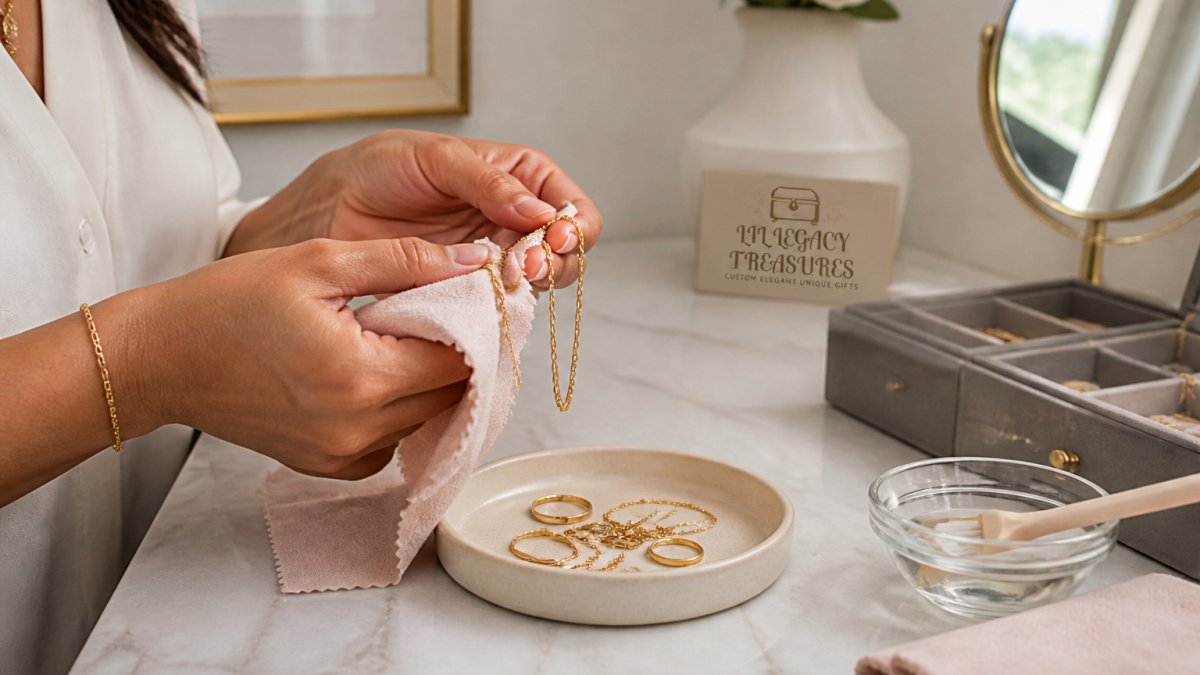
When to Remove 14K Gold
- Swimming and hot tubs: Chlorine and bromine can attack the alloy metals in 14K over repeated exposure, and the effect is cumulative. A dip now and then is low risk; regular pool sessions in the same ring are not. Take rings and bracelets off before you swim.
- Cleaning with harsh chemicals: Bleach, ammonia-based cleaners, and abrasive scrubbing powders can dull the surface and, in repeated exposure, pit the alloy. Wear gloves or remove the piece.
- Exercise and manual work: Gyms, gardening, and moving furniture are where most dents and prong bends happen. A ring that survives the office can still ovalize on a dumbbell.
White Gold vs. Yellow Gold: Color-Specific Care
This is where care advice most often goes wrong. White 14K gold is usually finished with a rhodium plating for its bright, cool-white look. That plating is a surface coating, not the metal itself, and it wears down with daily friction, typically over months to a couple of years depending on wear.
Yellow 14K gold has no coating to wear off. Its color comes from the alloy itself, so it can be polished indefinitely without losing its tone.
Solid 14K vs. Gold-Plated and Gold-Filled: A Care Distinction That Matters
A common buying confusion is treating “gold” jewelry as one category. It is not, and the care routines are different.
- Solid 14K gold is 14K gold all the way through. Scratches can be polished out, dents can sometimes be worked out, and the piece can be repaired and re-polished for decades. Care is simple: keep it clean, remove it for harsh chemicals and swimming, store it separately.
- Gold-plated jewelry is a base metal with a thin layer of gold on top. That layer wears through with friction, and once it does, the base metal shows and can discolor skin. Plated pieces need gentler handling, should not be polished aggressively, and have a finite wear life regardless of care.
- Gold-filled jewelry has a much thicker layer of gold bonded to a base metal, legally defined in the U.S. as a minimum fraction of gold by weight, and it lasts far longer than plating, but it is still not solid gold. It can be worn daily, but deep scratches expose the core, and it cannot be re-polished the way solid 14K can.
If a piece is described only as “gold” without a karat stamp, assume it is plated or filled until proven otherwise. Solid 14K is typically stamped “14K” or “585.”
FTC guidance on gold jewelry marketing claims
Legacy Luxe Keepsake Envelope Necklace →
Storage and Cleaning Basics
Store each piece separately in a soft pouch or a lined compartment to prevent chains from scratching pendants and rings from scratching each other. Wipe with a lint-free cloth after wear to remove skin oils and lotion.
If you're caring for plated or gold-filled pieces alongside solid 14K, our guide on how to maintain gold plated jewelry walks through the cleaning routine step by step.
14K Gold Durability by Jewelry Type: Rings, Necklaces, and Bracelets
Karat tells you what the metal is made of; construction tells you how long it will last. Two 14K rings can wear very differently depending on whether the band is solid or hollow, how thick the metal is, and how the stone is set. This is the part most karat guides skip, and it matters more for daily wear than the difference between 14K and 18K.
Rings: The Highest-Wear Piece You Own
A ring on your dominant hand contacts desks, door handles, gym equipment, and steering wheels dozens of times a day. In 14K, the practical durability questions are band thickness, setting style, and whether the shank is solid.
- Band thickness: A band under about 1.5 mm is prone to bending and ovalizing over years of wear; 2 mm and up holds its shape far better in 14K. Wider bands distribute impact and resist denting.
- Setting style: Bezel settings enclose the stone in metal and protect the girdle from knocks, while prong settings expose the stone and the prongs themselves. Prongs in 14K wear thin over time and need periodic re-tipping; a bezel or a low-profile setting is the more durable daily-wear choice.
- Solid versus hollow: Hollow bands use less gold and dent or crush more easily, and once a hollow shank dents, it is difficult to restore. Solid 14K can generally be polished and repaired.
Bracelets: The Snag-and-Scratch Category
Bracelets swing, catch on sleeves and bag straps, and rest against desks and keyboards. In 14K, the durability variables are clasp quality and link construction.
- Clasps: A lobster claw or box clasp in solid 14K outlasts a spring-ring on a frequently worn bracelet. Ask whether the clasp is solid gold or a base-metal finding, because a plated clasp can fail long before the chain does.
- Chain style: Cable and curb chains in 14K resist kinking better than fine rope or snake chains, which can bend and crush with repeated pressure. Snake chains in particular are difficult to repair once a link collapses.
- Link gauge: Thicker links tolerate daily wear; very fine chains are better suited to occasional layering than to a bracelet you never remove.
Necklaces: Lower Impact, But Not Zero
Necklaces see less direct abrasion than rings or bracelets, but pendants and chains still rub against skin, clothing, and each other when layered. In 14K, the main wear points are the chain near the clasp, the jump ring connecting the pendant, and any engraved surface.
- Chain near the clasp: This is where most necklace wear concentrates, because the clasp and tag rub against the chain. A slightly heavier chain in this zone extends life.
- Jump rings: A soldered jump ring holds a pendant more securely than an open one; an open jump ring can work loose over years of daily wear.
- Engraving depth: Shallow laser engraving can soften with repeated polishing, while deeper engraving survives decades of cleaning. If a piece is meant to be worn daily and passed down, ask about engraving depth.
For a necklace built for everyday wear, the Legacy Luxe Personalized Bar Necklace is a lightweight, minimalist design.

Choosing a 14K Gold Keepsake That Lasts
A keepsake should outlast the moment it celebrates, and that's where 14k gold durable construction earns its place. At Lil Legacy Treasures, our made-to-order keepsakes are designed to be worn and treasured, like the Legacy Luxe Keepsake Envelope Necklace, available in gold or silver and personalized with a name, date, or short message.

If you're planning a milestone gift and want more inspiration, our roundup of custom heirlooms for milestone moments covers keepsake ideas that hold up over time.
Jewelers of America guide to gold karats and quality
Frequently Asked Questions
Are 14K gold rings durable enough to wear every day?
Yes. At 58.3% to 58.5% gold, 14K gold is hard enough for daily wear and resists scratches and dents better than 18K or 24K. Rings take the most abuse, so choose a solid (not hollow) band and remove it during heavy lifting, gardening, or gym sessions. With normal care, a 14K gold ring holds its shape and finish for years.
Is 10K or 14K gold more durable?
10K gold is slightly more durable because its lower gold content (41.7%) leaves more room for harder alloy metals. But 14K gold is still durable enough for daily wear and offers a richer yellow color and higher gold value. For most people, 14K gold is the better balance of strength, appearance, and long-term worth.
Does 14K gold tarnish with daily wear?
14K gold does not tarnish the way silver or lower-karat gold does, but it can develop a dull film from sweat, lotion, and soap. White gold may show wear as its rhodium coating fades. Clean your 14K gold jewelry with mild soap and warm water, dry it fully, and store it in a dry pouch to keep it bright.
Is 14K or 18K gold better for everyday wear?
14K gold is often chosen for everyday wear. Its higher alloy content makes it harder than 18K, which contains 75% gold and is softer. 18K gold suits occasional pieces and those who prefer a deeper yellow color,
Can you shower with 14K gold jewelry?
You can, but it is not ideal. Soap, shampoo, and hard water leave residue that dulls the shine, and repeated exposure can loosen settings over time. Remove 14K gold jewelry before showering, swimming, or applying lotion, and wipe it with a soft cloth after wear. This simple habit keeps your 14K gold durable and bright for decades.
The real test of a keepsake isn't the first wear, it's the hundredth. Lil Legacy Treasures crafts personalized pieces made to order, with engraving options, gold and silver finishes, and lightweight designs built for everyday wear. Explore our best sellers and choose a piece that carries your story for years to come.


